What is Search Intent in SEO?
Search intent in SEO is the goal behind a search query and the type of result Google believes will satisfy it best. It explains whether someone wants to learn, compare, buy, visit a specific page, or complete another action.
In SEO, search intent matters because Google does not rank pages only by keywords. It ranks pages that best match what users are trying to accomplish.
A page can use the right keyword and still fail if it has the wrong intent.
For example, a product page will struggle to rank for a keyword where Google shows mostly guides. A blog post will struggle to rank where users clearly expect product pages, tools, or service pages.
Search intent SEO means building the right page for the job.
Not louder content. Not longer content. Just the right content.
Search Intent vs Keywords
Keywords tell you what people type in the search bar.
Search intent tells you what they expect.
Both matter, but they do different jobs.
| Keywords | Search intent |
|---|---|
| Show what users type into Google. | Shows what users are looking for from the result. |
| Focuses on the exact phrase searched. | Focuses on the goal behind the query. |
| Guides targeting, titles, headings, and relevance. | Guides page type, structure, depth, and CTA. |
| Example: “best SEO consultant”. | Example: the user is likely comparing options before contacting someone. |
| Common mistake: assuming you already know the intent behind a keyword. | Common mistake: not satisfying the main intent clearly enough. |
Main Types of Search Intent in SEO
Most SEO intent analysis uses four practical categories, plus mixed intent. These categories help you choose the right content format without turning keyword research into interpretive dance.
| Category | Best page match |
|---|---|
| Informational | Guides, tutorials, definitions, checklists, FAQs, and educational blog posts. |
| Commercial | Comparisons, reviews, alternatives, buyer guides, and “best” pages. |
| Transactional | Product pages, service pages, landing pages, quote forms, and booking pages. |
| Navigational | Homepage, login page, branded pages, location pages, and official profiles. |
| Mixed | Structured pages that answer, compare, and guide users to the next step. |
Informational Search Intent
Informational search intent means the user wants to learn or understand something.
The keyword may be shorter, but the results often include explanatory words like “what,” “how,” “why,” “guide,” or “examples” in titles and headings.
The best page usually gives a direct answer first, then adds useful depth. For “what is search intent in SEO,” a clear definition should appear before strategy, tools, or examples.
Examples by niche:
| Niche | Informational keywords |
|---|---|
| Dentists | “dental implants”, “gum disease”, “teeth whitening” |
| Med spas | “laser hair removal”, “skin tightening”, “chemical peel” |
| Accountants | “tax planning”, “cash flow”, “VAT return” |
| Law firms | “intellectual property”, “employment law”, “business contracts” |
| CRM SaaS | “customer onboarding”, “churn rate”, “lead tracking” |
| B2B software | “analytics dashboard”, “email automation”, “workflow automation” |
Commercial Search Intent
Commercial search intent means the user wants to compare options before making a decision. The keywords or results often include words like “best,” “top,” “review,” “comparison,” “alternative,” or “vs”.
The best page usually helps the user choose. For a keyword with commercial search intent, comparison tables, pros and cons, pricing notes, use cases, and decision criteria matter more than a generic explanation.
Examples by niche:
| Niche | Commercial keywords |
|---|---|
| Dentists | “best dentist”, “dentist reviews”, “dental clinic” |
| Local services | “best plumber”, “electrician reviews”, “cleaning company” |
| SaaS | “best CRM”, “CRM comparison”, “HubSpot alternatives” |
| Restaurants | “best restaurant”, “restaurant reviews”, “best pizza” |
| Construction | “best contractor”, “builder reviews”, “roofing companies” |
Transactional Search Intent
Transactional search intent means the user is ready to take action. They often include words like “buy,” “book,” “order,” “quote,” “pricing,” “near me,” or “appointment”.
The best page should make the next step obvious. For a keyword with transactional search intent, the page needs clear pricing signals, trust proof, service details, and a strong call to action near the top.
Important note: These are often the most valuable keywords to rank for because the user is close to making a decision.
| Niche | Transactional keywords |
|---|---|
| Dentists | “book dentist”, “emergency dentist”, “dental appointment” |
| Local services | “plumber quote”, “book cleaner”, “emergency electrician” |
| SaaS | “dentist CRM pricing”, “clinic software demo”, “buy CRM software” |
| Restaurants | “book sushi restaurant”, “pizza reservation”, “restaurant booking” |
| Construction | “roofing quote”, “book contractor”, “renovation estimate” |
| Local commercial | “book dentist Milan”, “plumber quote Rome”, “contractor estimate London” |
Navigational Search Intent
Navigational search intent means the user wants to find a specific brand, website, page, location, or login. These searches often include brand names, product names, addresses, opening hours, or account-related terms.
The best page should send the user exactly where they expect to go. For a keyword with navigational search intent, the result needs clear branded pages, accurate business information, sitelinks, and no confusing detours.
Examples by niche:
| Niche | Navigational keywords |
|---|---|
| Dentists | “BrightSmile Dental”, “BrightSmile hours”, “BrightSmile address” |
| Local services | “Roma Plumbing”, “Roma Plumbing reviews”, “Roma Plumbing phone” |
| SaaS | “TaskPilot login”, “TaskPilot pricing”, “TaskPilot support” |
| Restaurants | “Tony’s Sandwiches”, “Tony’s menu”, “Tony’s reservations” |
| Construction | “BuildRight Contractors”, “BuildRight portfolio”, “BuildRight reviews” |
Mixed Search Intent
Mixed search intent means the keyword can satisfy more than one user goal. Google may show guides, comparisons, product pages, local results, videos, or tools on the same SERP.
The best page should satisfy the dominant intent first, then support the secondary intent. For a keyword with mixed search intent, the page must avoid becoming a buffet with no plate. Clear structure wins.
Common mixed-intent pages:
- Service pages (informational + transactional): educate the buyer, explain the service, show expertise, then make the next step clear.
- Best-of articles (commercial + transactional): compare options, explain decision criteria, then guide users toward a choice.
- Comparison pages (commercial + informational): show differences, pros and cons, use cases, and when each option makes sense.
- Local landing pages (navigational + transactional): confirm location, service area, reviews, contact details, and booking options.
- Buying guides (informational + commercial): explain what matters, compare options, and link to deeper product or service pages.
How Google Uses Search Intent
Google uses search intent to rank results that match what the user likely wants, not just the words they typed. That is why a page can mention the right keyword and still fail if the format, depth, or angle is wrong.
Search intent SEO matters because Google rewards pages that satisfy the user’s actual need. If users expect a comparison and land on a sales page, the page may feel wrong immediately.
Google’s Search Quality Rater Guidelines use Needs Met ratings to evaluate how well a result satisfies the searcher’s intent.
In practice, intent affects:
- Which page you should create: article, service page, product page, tool, or comparison.
- How much detail users need: quick answer, full guide, or buying advice.
- What format feels right: list, table, tutorial, review, or landing page.
- What next step makes sense (CTA): read more, compare, book, buy, or contact.
- How fast the page helps: the main answer should appear early.
How to Identify Search Intent
You identify search intent by checking the SERP, not by guessing from the keyword alone. The query gives clues, but Google’s results show what users actually expect.
A keyword can look informational and still rank service pages. It can look transactional and still rank guides. The SERP is the referee.
1. Analyze Top Ranking Pages and Formats

The SERP (Search Engine Results Page) shows what Google currently trusts for a query. Before writing, search the keyword and check what kind of pages appear most often at the top.
Use these rules:
- If guides dominate: write an educational article.
- If service pages dominate: create a service page.
- If product pages dominate: focus on product or category pages.
- If comparison pages dominate: build a comparison or “best” page.
- If tools dominate: consider a calculator, checker, or template.
- If mixed formats rank: satisfy the strongest intent first.
This avoids forcing the wrong page type onto the keyword. The SERP is basically Google showing its homework.
2. Use a Search Intent Checker

A search intent checker or keyword tool can speed up sorting large keyword lists. Tools like Ubersuggest, Semrush, and Ahrefs can label intent during keyword research.
This is useful when you are grouping hundreds of terms and need a first pass before checking SERPs manually.
Use intent tools to:
- Group similar keywords faster
- Spot obvious intent patterns
- Separate blog and service topics
- Find mixed-intent keywords
- Avoid building the wrong page type
Do not treat the tool label as final. A keyword tool can help you sort faster, but the live SERP still shows what Google actually rewards.
How to Optimize Content for Search Intent
To optimize content for search intent, satisfy the main intent as early and clearly as possible. The page should give everything the users want before they have to look for it elsewhere.
Use SERP analysis to confirm the intent.
The goal is to match what the algorithm understands the query to mean, not what the keyword seems to mean in isolation.
Use this checklist:
- Choose the right page type: guide, comparison, service page, product page, tool, or local page.
- Answer the main need early: definition, recommendation, offer, price context, or booking path.
- Match the expected depth: quick answer for simple term definitions, deeper structure for broad or mixed queries.
- Use the right format: table for comparisons, steps for tutorials.
- Add decision elements: criteria, examples, reviews, pricing signals, or trust proof.
- Place the CTA naturally: links for learning, clear buttons for action.
1. Match Content Type to Search Intent
The content type should match the job of the query. A tutorial, comparison page, service page, and local page need different formats, depth, and calls to action.
| Page type | How to match search intent |
|---|---|
| Guide / explainer (what is local SEO) | Open with a direct answer, then add short sections, examples, and FAQs. Usually 800 to 1,800 words. CTA should be soft, like an internal link or related service. |
| Tutorial / checklist (Google Business Profile checklist) | Start with a step summary, then use numbered steps, screenshots, checklists, and mistakes. Usually 1,200 to 2,500 words. CTA can point to a template, tool, or implementation help. |
| Comparison / best-of page (SEO vs Google Ads, best CRM for dentists) | Lead with a comparison table or ranked list. Add criteria, use cases, pros and cons, pricing context, and recommendations. Usually 1,500 to 3,000 words. CTA should help users compare, book, or choose. |
| Service / local page (local SEO consultant, dentist in Milan) | Start with the service promise. Add proof, process, reviews, location signals, pricing signals, and FAQs. Usually 800 to 1,800 words. CTA should be direct and visible early. |
| Product / pricing page (dental CRM pricing) | Put the main benefit or price range early. Show features, plan logic, proof, objections, and FAQs. Usually 700 to 1,500 words. CTA should be demo, quote, buy, or contact. |
| Tool / calculator page (SEO audit tool) | Put the tool first, then explain the result after interaction. Usually 500 to 1,200 words around the tool. CTA should appear after the output, when value is clear. |
2. Check SERP Features and Layouts
SERP features show what Google thinks users need beyond standard ranking pages. They help you decide what to include inside your content, not just what page type to create.
Use them as content clues:
- Featured snippets: add a short direct answer near the top.
- People Also Ask: include missing questions in sections or FAQs.
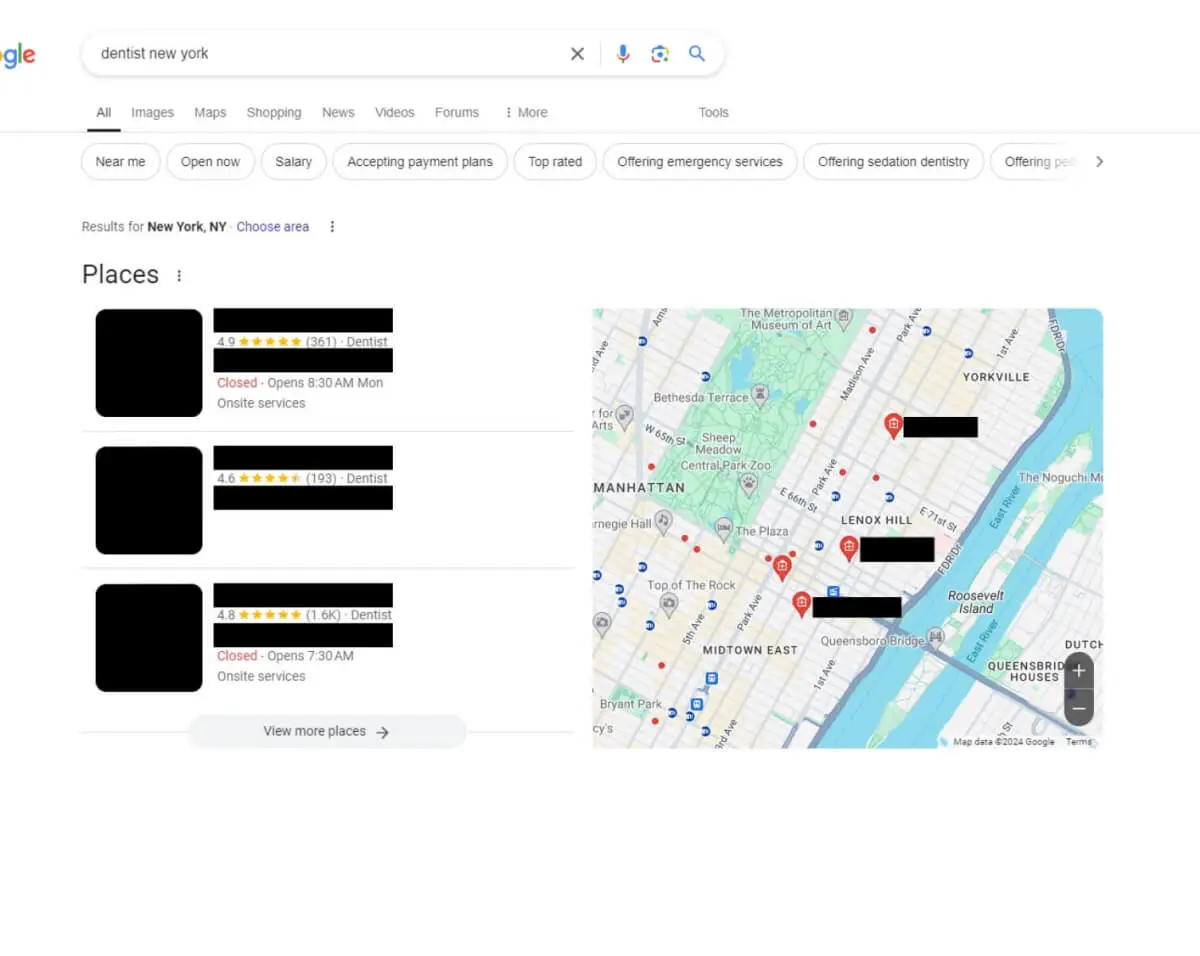
- Local packs: add location, service area, reviews, and contact details.
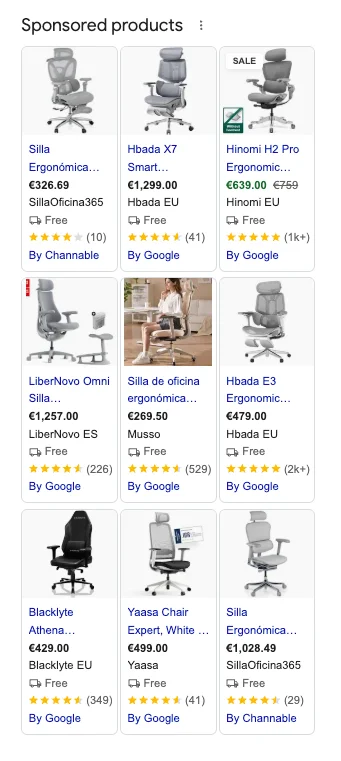
- Shopping results: include products, prices, availability, or buying paths.
- Videos: add visuals, steps, screenshots, or a short explainer video.
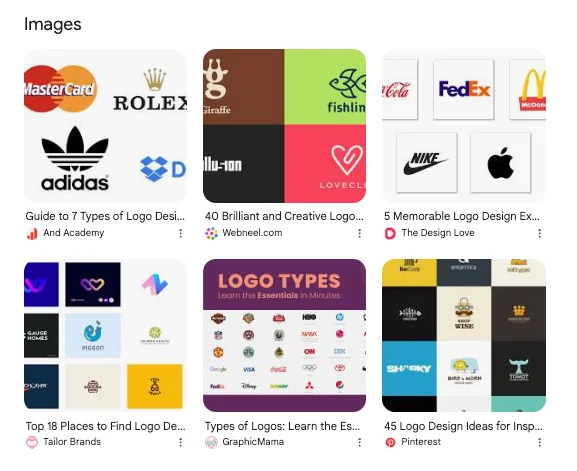
- Image packs: include examples, diagrams, before/after images, or inspiration.
The page type tells you what to build. SERP features tell you what the page should contain.
Search Intent in AI Search
AI search makes user queries longer, more specific, and more contextual. Instead of typing “SEO consultant”, someone can ask for “an SEO consultant for a dental clinic in Milan that needs local SEO, better tracking, and more qualified leads.”
For SEO, this means pages can match more specific audiences, problems, areas, and use cases, even when those exact phrases have little traditional search volume.
That does not mean creating 30 near-identical pages for every small variation. Add more useful context to the main page instead.
Add clearer context to your main pages:
- Who you serve: dentists, SaaS founders, local services.
- Problems solved: low leads, weak tracking, poor conversions.
- Areas covered: city, region, or service radius.
- Use cases: local SEO, AI visibility, CRO, redesigns.
- Decision criteria: budget, timeline, industry, business stage.
- Proof points: case studies, results, reviews, examples.
How to Optimize Content for AI Search →
Zero-Click Results Reduce Informational Clicks
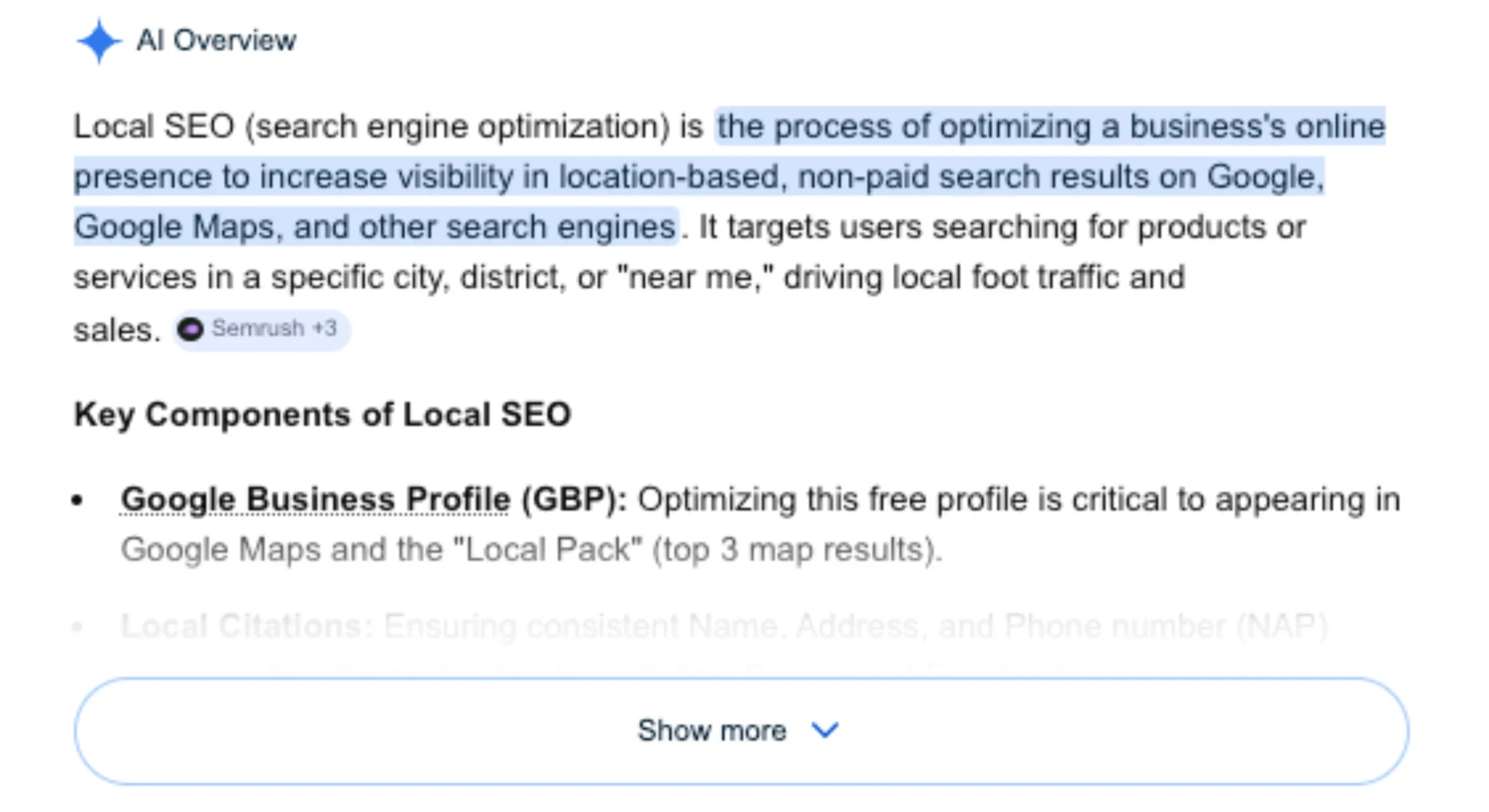
Zero-click results happen when users get the answer without visiting a website. This can happen through featured snippets, People Also Ask, knowledge panels, Google AI Overviews, ChatGPT, Gemini, Perplexity, or other AI answer engines.
This mainly hurts informational queries. In the past, someone searching “what is local SEO” or “how Google reviews work” might click a full guide, read more, and remember the brand after seeing it across multiple topics.
That branding path is weaker now. Simple definitions and basic explanations are often consumed directly inside Google or AI tools, without the user reaching the source.
Informational content still matters, but mostly as support. It helps prove expertise, connect topics, and feed AI citations. It is less reliable as a direct traffic or lead source.
7 Content Types That Generate Leads from AI Search →
Common Search Intent Mistakes
Most search intent mistakes come from either misreading the intent or building the wrong page for it. The keyword may look simple, but the SERP can show a different need than expected.
Common mistakes include:
- Misreading the dominant intent: assuming informational when the SERP is commercial.
- Overloading mixed intent: trying to satisfy every angle equally.
- Making the page too sales-heavy: pushing action before answering the need.
- Making the page too educational: burying the decision or CTA.
- Trusting tools too much: accepting intent labels without checking the SERP.
- Adding irrelevant depth: writing more without improving satisfaction.
The fix is to identify the main intent first, then make the page serve that intent before anything else.
FAQs about Search Intent SEO
These questions cover the edge cases that usually appear after the basics are clear. Use them to decide when to split pages, update content, or rethink keyword targeting.
Can search intent change over time?
Yes, search intent can change when user behavior, products, news, or Google’s SERP layout changes. A keyword that once ranked guides may later rank product pages, videos, or local results. Review important keywords regularly, especially after ranking drops or major SERP changes.
Should one page target multiple intents?
One page can target multiple intents only when the SERP clearly shows mixed intent. The page still needs one dominant purpose. Secondary intent should support the main journey through sections, FAQs, and internal links, not turn the page into a confused buffet.
How do you fix a page with wrong intent?
Fix a wrong-intent page by comparing it against the current top results and changing the format. If Google ranks comparisons, rebuild around comparison. If it ranks service pages, move toward conversion. If the mismatch is too large, create a new page.
Does search intent affect conversions?
Yes, search intent affects conversions because not every visitor is ready for the same action. Informational users may need internal links or lead magnets. Commercial users need proof and comparison. Transactional users need a clear CTA with minimal friction.
Is search intent the same as user intent?
Search intent and user intent are often used the same way in SEO. Search intent usually refers to the goal behind a search query. User intent can be broader, including behavior before and after the search, such as browsing, comparing, or returning later.
Can a keyword have no clear intent?
Yes, some keywords have unclear intent because they are too broad or used by different audiences. In those cases, the SERP is the deciding tool. If results are mixed, build around the dominant format and use internal links for secondary paths.
Links Related to Search Intent SEO
- Generative Engine Optimization (GEO): The Complete Guide
- 12 GEO Ranking Factors
- GEO vs SEO: 5 Differences in AI Search
- Schema Markup for AI Search
- 7 Content Types for AI Search Visibility
- How to Optimize Content for AI Search
- How to Use ChatGPT like a pro
- How to Use AI Tools
- The Ultimate AI Tools List
- What is AEO? (AI Engine Optimization)
- ChatGPT SEO: How to Rank in ChatGPT
- AI SEO Checklist
- AI SEO for Ecommerce
Need help matching SEO content to intent?
If your pages rank poorly or attract the wrong visitors, the issue may not be the keyword. It may be the intent match, the page structure, or the content format.
Contact me to build a calmer SEO system that turns searches into useful pages, not another content mess wearing a blazer.

Why Choose Me to Help You with Search Intent SEO
- 37K → 76K organic clicks: scaled traffic while improving conversion structure
- 120+ new clients per month generated: SEO directly connected to real acquisition (single client case)
- 3x annual revenue growth: driven by SEO and conversion-focused website improvements
- SEO built to drive users, not just traffic: every page has a clear path to signup or lead
- Some clients started getting leads within 2–3 weeks from launch (from different channels, including search and AI tools)
- Compounding results over time: some websites still generate leads years later without additional marketing
- Authority signals that matter: a client was organically cited in an official UK government resource
Results come from structure, positioning, and execution. Not luck or shortcuts.