The New Reality of Search (Simple Explanation)
In the past, SEO worked like this.
- Someone searched a question
- Google showed 10 results
- The user clicked a website
- The website converted the visitor
Now the process often looks different.
- Someone asks AI a question
- AI gives a full answer
- The user does not click anything
AI tools can generate answers directly inside the chat.
That means visibility does not always produce traffic the way it used to.
However, businesses can still benefit from appearing inside those answers.
The key is understanding how AI search visibility actually works.
The Two Types of Visibility That Matter in AI Search
AI visibility does not always work like traditional search rankings.
In many cases the system generates its own answer.
However, businesses can still appear in two important ways.
1. Brand Mentions Inside AI Answers
Sometimes AI answers include brands or providers connected to the topic.
Example question someone might ask:
“Who are good SEO consultants for local businesses?”
An answer might look like:
Tommaso Liu — known for Local SEO and AI visibility strategies
Consultant X — specializes in e-commerce SEO
Agency Y — focuses on enterprise SEO
Even if there is no clickable link, the brand becomes associated with the solution.
This often leads to follow-up searches such as:
- “Tommaso Liu SEO consultant”
- “Tommaso Liu website”
- “Hire Tommaso Liu SEO”
In other words, AI visibility can create brand demand.
2. Website Links Cited as Sources
Sometimes AI systems include links when they need specific information or data.
This happens more often when the question requires:
- statistics
- comparisons
- product lists
- research
Example query:
“What are some SEO statistics for small businesses?”
An AI system may cite a page containing original statistics.
In this case your website link appears directly in the answer.
That type of visibility can generate immediate traffic.
Content That Generates Leads vs Building Authority in AI Search
| Lead-Generating Pages | Authority-Building Pages |
|---|---|
| Service pages | Definitions and glossary pages |
| Product pages | Tutorials and how-to guides |
| Location service pages | Comparison articles |
| Provider listicles | Case studies |
| Statistics or research pages | Problem-solution articles |
| Tools or calculators | In-depth strategy guides |
| Named frameworks or methods | Educational guides |
Authority content helps AI systems and search engines understand your expertise.
Lead-focused content attracts users who are ready to hire a provider or buy a product.
Both matter. But if the goal is leads, the first column deserves more attention.
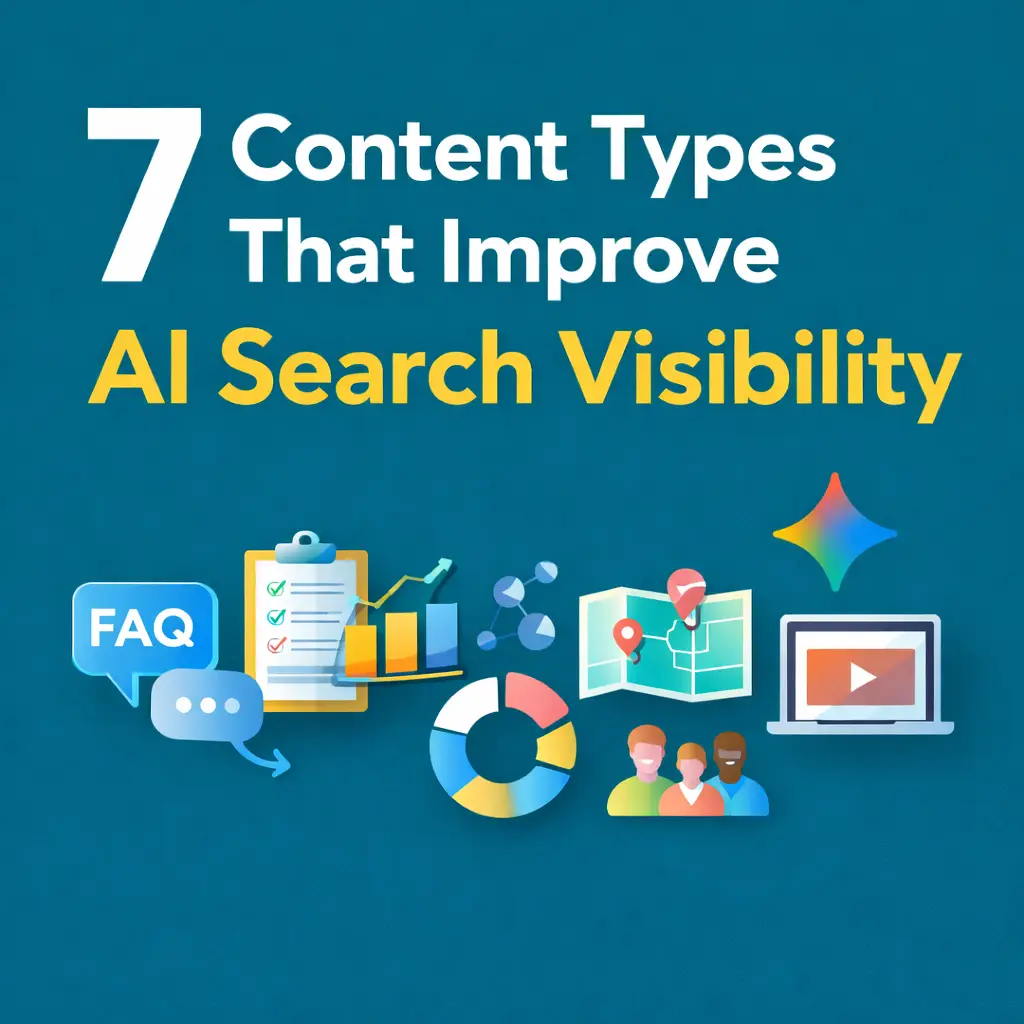
7 Content Types That Improve AI Search Visibility
Not every article attracts potential clients.
The following content types are more likely to generate visibility and leads because users asking these questions usually need a provider, product, or solution.
1. Service Pages
Service pages explain what a business offers.
Examples include:
- SEO consulting services
- website design services
- digital marketing services
- accounting services
These pages help AI systems associate your brand with the service itself.
When users ask about providers or experts, your business becomes easier to reference.
A strong service page includes:
- clear explanation of the service
- expected results
- testimonials or proof
- a clear contact action
2. Product Pages
For SaaS or e-commerce businesses, product pages play a similar role.
Examples include:
- software tools
- SaaS platforms
- physical products
Users researching products are usually evaluating options.
AI systems often reference products when explaining solutions.
These pages help connect your brand with the problem it solves.
3. Location-Based Service Pages
Location pages are similar to service pages but serve a different purpose.
Service pages tell AI what you do.
Location pages tell AI where you operate or who you serve.
Examples include:
- SEO consultant in London
- marketing consultant in Europe
- web design services in Madrid
These pages repeat the service while specifying the area.
Even remote businesses benefit because users often prefer providers connected to a location.
4. Provider Listicles (Including Your Business)
List articles can generate visibility when they compare real providers.
Examples include:
- best SEO consultants for small businesses
- best marketing agencies in Europe
- best website designers for startups
These articles should include your own business.
They help users compare options and help AI systems identify entities linked to a topic.
AI answers often rely on list-style content for recommendations.
5. Statistics, Research, or Benchmark Pages
AI systems often cite numbers when answering questions.
Pages containing structured data have a higher chance of being referenced.
Examples include:
- SEO statistics for small businesses
- website conversion benchmarks
- marketing budget averages
Anything with numbers supported by sources can become a reference page.
When AI needs data, it may cite these pages directly.
6. Tools, Calculators, or Interactive Resources
Practical tools are often recommended when users ask how to solve a problem.
Examples include:
- SEO audit tools
- ROI calculators
- marketing budget calculators
AI systems frequently suggest tools that help users take action.
Publishing useful tools increases the chances of being recommended.
7. Named Frameworks or Methods
Creating a named framework can position you as the source of a concept.
A well-known example is the Skyscraper Technique, created by Brian Dean.
People ask questions like:
“What is the Skyscraper Technique in SEO?”
AI answers typically explain the concept and mention its creator.
The same applies to original frameworks.
If you create a named method, AI systems may associate that concept with your brand.
Should You Create Authority Content or Lead Pages First?
Both types of content are important.
However, lead pages should usually come first.
Service pages and product pages define what your business offers.
Without them, informational content has no clear commercial connection.
Once those pages exist, authority content strengthens credibility and expands topical coverage.
A simple structure is:
- publish core service or product pages
- create location and list pages
- expand with authority content
This helps both search engines and AI systems understand what you do and why you are relevant.
FAQs about Content Types for AI Search Visibility
Do AI tools always show links to websites?
No.
Many AI answers appear without links.
Links are more likely when the system needs structured information like statistics or research.
Can AI visibility generate leads without clicks?
Yes.
Brand mentions often lead to follow-up searches where users look for the business directly.
What content is most likely to improve AI search visibility?
Content connected to providers or solutions performs best.
Examples include:
- service pages
- product pages
- provider listicles
- statistics pages
These topics attract users who are closer to taking action.
Is traditional SEO still relevant?
Yes.
Search engines still drive traffic.
However, content now needs to work for both search engines and AI systems.
Why are statistics pages often cited by AI?
AI systems use numbers to support answers.
Pages with structured data and sources have a higher chance of being referenced.
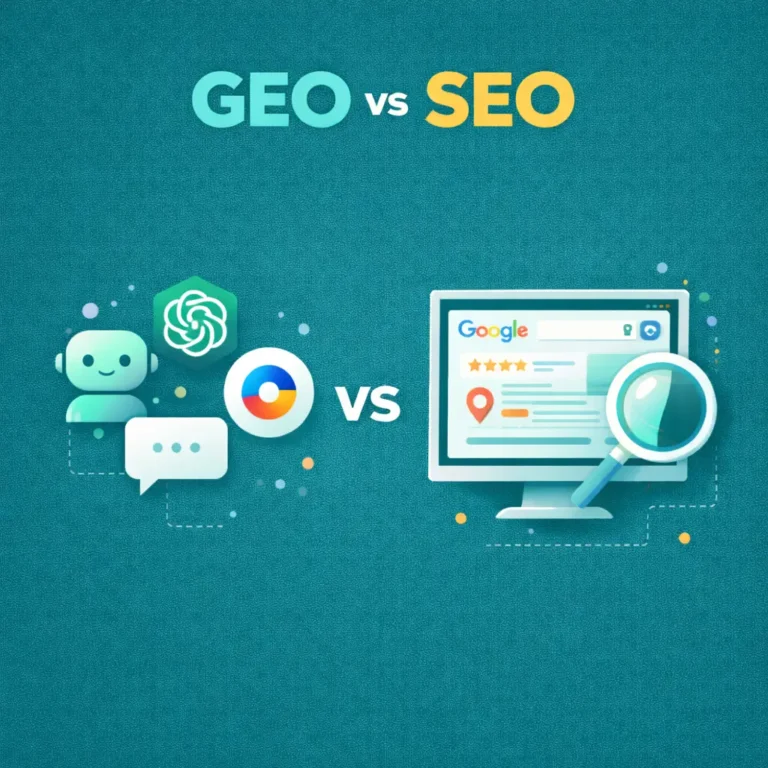
| SEO | GEO |
|---|---|
| Users see a list of search results | Users see an AI-generated answer |
| Visibility depends on ranking positions | Visibility depends on being referenced |
| Traffic comes mainly through clicks | Visibility may happen without a click |
| Keywords often trigger results | Questions and conversations trigger answers |
| Search engines organize information | AI systems synthesize information |
Understanding these differences helps businesses adapt their strategy without abandoning SEO entirely.